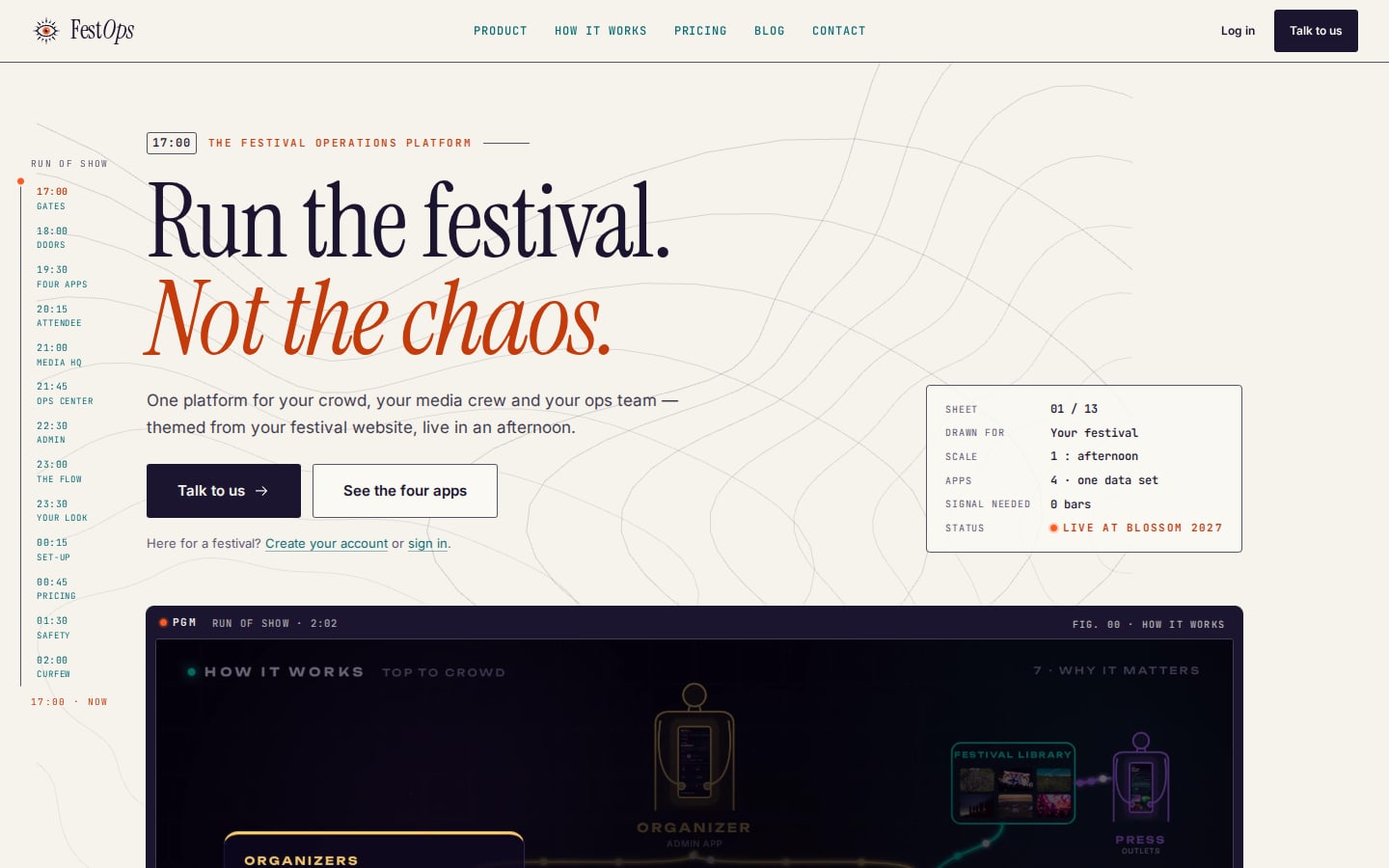
Milestone, October 26, 2026: where The Bailey Perspective is headed and what it will take to get there. This one: Run Blossom 2027 entirely on FestOps (target: April 23–25, 2027).
Our goal for the next year is clear: run Blossom 2027 entirely on FestOps. That means every crew shift, incident, quest and media request for the three‑day festival will be managed inside the platform we built. We’re telling you this because we know how hard it is to chase a concrete milestone with a small team, and we want to share what that looks like in practice.
Why it matters
FestOps is the product we created to solve the chaos that festivals face. It consolidates scheduling, incident response, media coordination and attendee information into a single, AI‑assisted workflow. If we can run our own festival on it, we get the most convincing evidence that it can do the same for other organizers. That proof is what will persuade the next festival to sign up.
For the people we build for—small festival teams, community organizers and creative crews—this milestone matters because it turns a promise into a demonstrable capability. They’ll see a real festival run on the platform, with all the data and automation we promised. That visibility reduces the risk they take when they consider adopting FestOps, and it gives them a concrete example of how the system can be used in the real world.
Where we are today
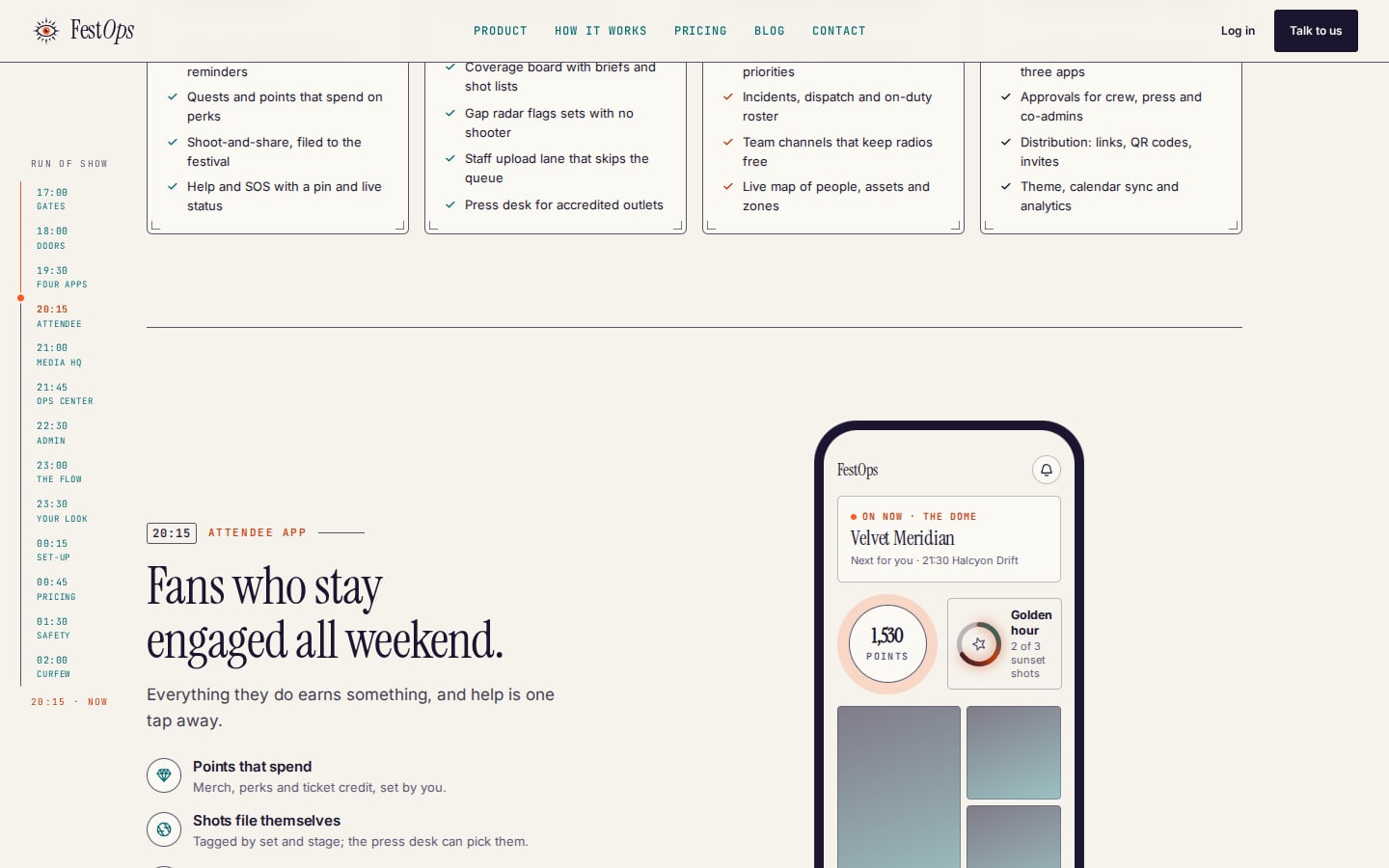
Right now the Blossom guide already runs as its own FestOps tenant. Ticketing is live on Stripe, and the organizer dashboard, crew app and media HQ exist in the Site Plan theme. Those are the core pieces of the platform that are functional and accessible.
What’s still missing is the full integration of the Blossom crew into the app, the loading of the schedule and site map, and the rehearsal of the incident flow with volunteers. We also need to publish the attendee guide from the same data source that feeds the ticketing and scheduling systems. These tasks are essential to moving from a demo tenant to a fully operational festival.
What it takes to get there
First, we’ll onboard the Blossom crew into the FestOps app. That involves creating user accounts, assigning roles, and training them on how to use the crew app for shift management and incident reporting. Next, we’ll load the schedule and site map into the system, ensuring every event slot and venue location is correctly mapped.
After the data is in place, we’ll conduct a rehearsal of the incident flow with volunteers. This step is critical because it tests the real‑time incident response workflow and verifies that the system can notify the right people, log incidents, and update the incident board automatically.
Finally, we’ll publish the attendee guide from the same data feed. This means the guide will reflect the live schedule, venue maps, and any updates that occur during the festival, giving attendees a reliable source of information.
The biggest potential slow‑downs are user adoption and data accuracy. If crew members are not comfortable with the app, or if the schedule data contains errors, the entire workflow will falter. We’ll mitigate these risks by scheduling short, focused training sessions and by running a data validation check before the rehearsal.
One thing you can borrow
A concrete milestone like running a festival on your own platform forces you to map out every step, test each piece in isolation, and then weave them together. For any business owner chasing a goal, start by identifying the core components that must work, then build a plan that moves from data ingestion to user training to live testing. The key is to keep the focus on the end‑user experience—what they need to do, not just what the system can do.
We will report back here when it is reached. Until then, the Studio Log carries the week-to-week progress.